
Wood Fireplaces Australia: The Complete Buying Guide
Slow combustion explained, running costs, sizing, flue and council rules, and 20+ real wood heaters compared with actual Australian prices, from a regional Victorian heating specialist that has lived and breathed wood heating for 30+ years.
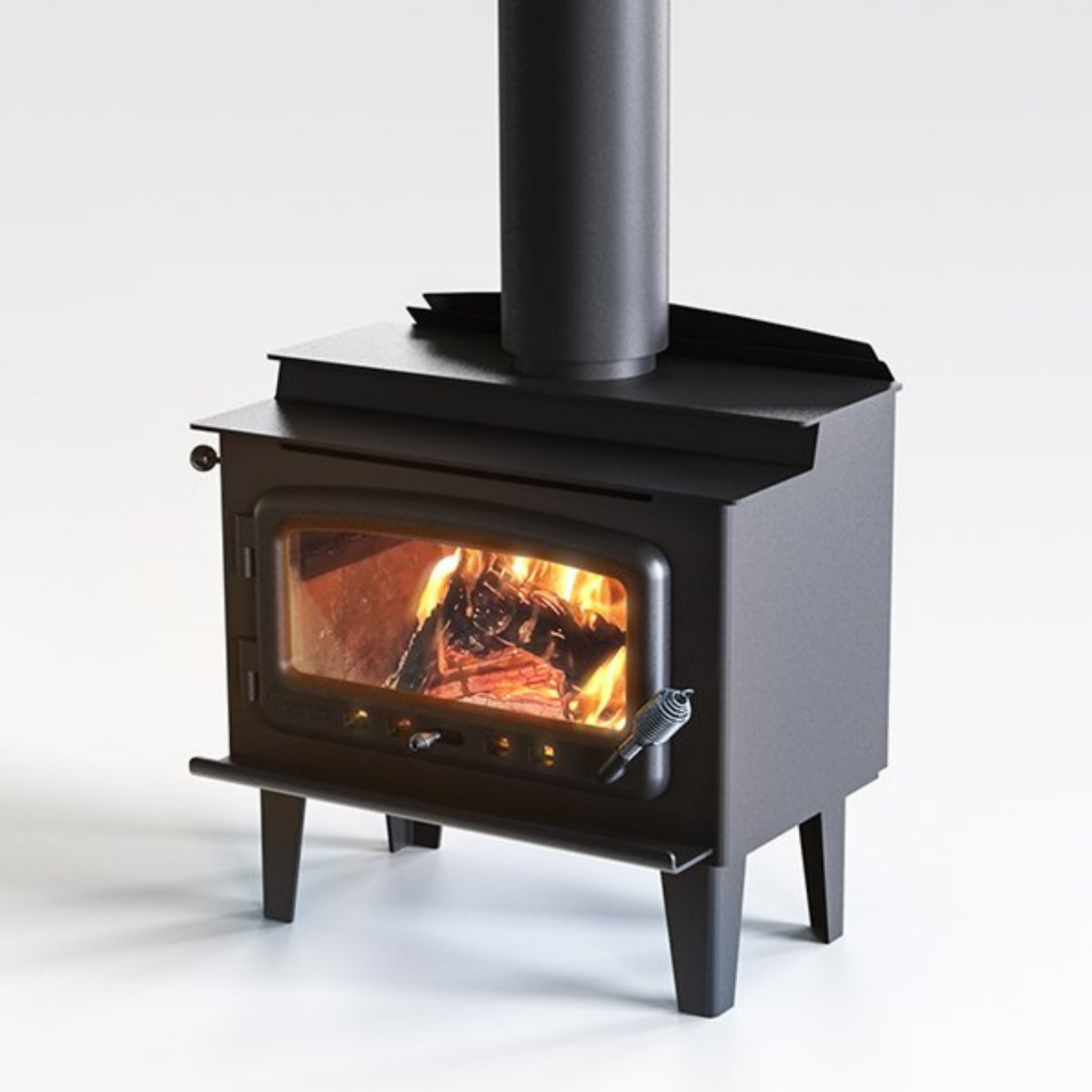
What is a wood fireplace? A modern wood fireplace in Australia is almost always a slow combustion wood heater: a sealed steel or cast iron firebox that burns hardwood logs behind glass, with controlled airflow that extracts far more heat from each log than an open fire while producing minimal smoke. Slow combustion heaters deliver the highest heat output of any domestic fireplace type, with large models rated to warm open-plan areas of 300+ square metres. Prices in Australia range from around $1,099 for a compact Australian-made freestanding heater to $7,000+ for double-sided architectural fireplaces, plus flue kit and installation.
- Wood is the most powerful fireplace type: slow combustion heaters heat whole open-plan homes, where gas manages one large zone and electric one room.
- With firewood at typical regional prices of $120 to $300 per tonne, wood heating is usually the cheapest form of home heating per unit of warmth in Australia, and close to free with your own wood supply.
- New wood heaters sold in Australia must meet AS/NZS 4013 emissions and AS/NZS 4012 efficiency standards, and installation must comply with AS/NZS 2918.
- A typical home burns 2 to 4 tonnes of hardwood per winter depending on climate, insulation and how many hours the fire runs.
- O'Briens stocks 72 wood fireplaces and heaters across Blaze, Kemlan, Quadrafire, Wood Pro, Jindara, Heat & Glo and Stuv, from $1,099, with Australia-wide delivery and flue kits available.
How Do Slow Combustion Wood Heaters Work?
The leap from an open fireplace to a modern slow combustion heater is bigger than most people realise. Understanding it explains why a sealed firebox can heat five times the area of an open hearth on the same wood.
An open fireplace sends most of its heat, and a lot of your warm room air, straight up the chimney. A slow combustion heater seals the fire behind a glass door and gives you control of the air supply. Restricting airflow slows the burn, holds temperatures high inside the firebox, and ignites the flammable gases in the wood smoke through secondary combustion, which is where much of the heat in wood actually lives. The result: more heat from every log, burn times that can run overnight, and dramatically less smoke from the flue.
Heat reaches your room two ways. Radiant heaters throw warmth directly from the hot firebox, wonderful in the immediate area and quick to feel. Convection models wrap the firebox in an outer casing that draws cool air in at the bottom, warms it, and circulates it through the room, often with a fan, which distributes heat more evenly across large open-plan spaces. Many modern Australian heaters combine both, and an air-wash system sweeps the glass to keep the flame view clear.
Why Wood Still Wins in Australia
Unbeatable Heat
Nothing else comes close. Large slow combustion heaters are rated to warm 300+ square metres, making wood the only fireplace type that can genuinely heat a whole home.
Cheapest to Run
With affordable firewood access, wood heating costs less per unit of heat than gas or electricity, and it is effectively free if you cut your own on a rural block.
Heats Through Blackouts
No electricity or gas connection required to run. In regional Australia, where winter outages happen, a wood fire keeps the house warm when everything else stops.
Renewable Fuel
Sustainably sourced firewood is a renewable resource, and modern low-emission heaters burn dramatically cleaner than the smoky units of decades past.
The Real Thing
The crackle, the scent of burning hardwood, the ritual of lighting a fire. No gas log set or LED effect replicates it, and buyers pay a premium for homes that have it.
Built for the Bush and the Burbs
From compact heaters for a lounge room to double-sided fireboxes dividing open-plan spaces, the format range is wider than ever.
Types of Wood Fireplaces in Australia
Three main formats, each with real trade-offs. The right one depends on your floor plan, whether you have an existing fireplace, and how much of the home you want to heat.
Freestanding Wood Heaters
Stand on the floor and radiate heat from every surface, making them the most efficient way to get warmth into a room. Available on legs, pedestals or woodstacker bases that store your next load underneath. The easiest wood installation and the best value per kilowatt.
From $1,099
Shop the Blaze Z1 →Inbuilt & Insert Wood Fireplaces
Built into a wall cavity or slotted into an existing masonry fireplace, converting a heat-losing open hearth into a sealed, efficient heater while saving floor space. The Quadrafire Expedition 2 insert brings advanced clean-burn technology to old chimneys.
From $6,100
Shop the Expedition 2 Insert →Double-Sided & See-Through Fireplaces
One firebox, two rooms. Kemlan's double-sided Coupe and See-Through Cube act as a glowing room divider, heating both spaces and giving a flame view from every angle. The Coupe is also available in a wall penetration version for indoor-outdoor walls.
From $5,855
Shop the Kemlan See-Through Cube →Heater + Flue Kit Bundles
The flue is the hidden cost of wood heating that catches buyers out. Our Wood Pro heaters come bundled with a 4-metre insulated flue kit, so the price you see is much closer to the price installed.
From $3,890$4,244
Shop Wood Pro Bundles →Real Wood Heaters, Real Australian Prices, Compared
Manufacturer sites hide prices behind "find a dealer" buttons. Here is a straight comparison of popular models from our 72-heater range, with live pricing. Prices correct as at July 2026.
| Model | Type | Price (AUD) | Best for |
|---|---|---|---|
| Blaze Z1 Legs | Freestanding | $1,099 | Entry point, single living room |
| Blaze Z1 Woodstacker | Freestanding | $1,120 | Compact heater with wood storage base |
| Blaze B520 | Freestanding | $1,980 | Value mid-size Australian-made heater |
| Blaze Z2 Legs | Freestanding | $2,199 | Average family living areas |
| Blaze B820 | Freestanding | $2,325 | Larger rooms on a budget |
| Blaze Z2 Ash | Freestanding | $2,427 | Z2 with ash drawer convenience |
| Blaze Z3 Legs | Freestanding | $2,500 | Big spaces, serious output |
| Blaze Z3 Woodstacker | Freestanding | $2,729 | Large heater plus wood storage |
| Blaze Z3 Ash | Freestanding | $2,820 | Flagship Z-series with ash drawer |
| Kemlan Super Nova (Sale) | Freestanding | $2,949 (was $3,353) | Designer Australian heater at a sale price |
| Blaze B400 | Freestanding | $3,325 | High-output convection heating |
| Blaze B700 | Freestanding | $3,450 | Large open-plan family homes |
| Wood Pro WP200 + 4m Flue Kit | Freestanding bundle | $3,890 (was $4,244) | Complete package, flue included |
| Wood Pro WP300 + 4m Flue Kit | Freestanding bundle | $3,950 (was $4,444) | Bigger rooms, flue included |
| Kemlan XL Freestanding (Sale) | Freestanding | $4,077 (was $4,594) | Extra-large flame view, big areas |
| Kemlan C24 Series | Inbuilt | $4,594 | Classic inbuilt for existing openings |
| Jindara Grange (Sale) | Freestanding | $4,990 (was $5,720) | Premium cast-style Australian heater |
| Kemlan Halo 800 + Meridian Base (Sale) | Freestanding | $5,849 (was $6,728) | Architectural centrepiece |
| Kemlan See-Through Cube | Double-sided | $5,855 | Room divider with flame from both sides |
| Quadrafire Expedition 2 Insert | Insert | $6,100 | Converting existing masonry fireplaces |
| Kemlan Coupe Inbuilt Double Sided | Double-sided inbuilt | $6,475 | Open-plan dividing walls |
| Kemlan Coupe Wall Penetration | Double-sided, indoor-outdoor | $7,284 | Alfresco and living room from one fire |
This is a sample of the range: we stock 72 wood fireplaces and heaters in total, including Heat & Glo and Stuv models, plus hearths and flue components.
What Does Wood Heating Cost to Run in Australia?
Wood heating economics come down to your firewood price. Split, seasoned hardwood typically sells for $120 to $300+ per tonne delivered in Australia, cheapest in regional firewood country like North East Victoria and dearest in capital cities. A typical home burns 2 to 4 tonnes per winter, so a season of serious whole-home heating usually lands between a few hundred dollars and around a thousand, and near zero if you have your own wood supply.
| Scenario | Firewood cost | Approx. season cost (3 tonnes) |
|---|---|---|
| Own wood supply (rural block) | Your time and a chainsaw | Near zero |
| Regional delivered hardwood | $120 to $200/tonne | $360 to $600 |
| Metro delivered hardwood | $200 to $300+/tonne | $600 to $900+ |
Two rules maximise value. First, burn dry wood: hardwood seasoned to under 20 percent moisture releases far more heat and far less smoke than green wood, so buy ahead and store it under cover. Second, buy an efficient heater: modern slow combustion units certified to AS/NZS 4012 extract much more warmth per log than an old smoky box, so the better heater pays for itself in firewood over its 15 to 20+ year life.
What Size Wood Heater Do You Need?
Wood heaters are rated by the floor area they can comfortably warm. As a practical guide for Australian homes:
| Area to heat | Heater class | Example models |
|---|---|---|
| Up to ~150 m² (living zone) | Small to medium | Blaze Z1, Blaze B520 |
| ~150 to 250 m² (family home) | Medium to large | Blaze Z2, Wood Pro WP200, Kemlan Super Nova |
| 250 to 350+ m² (large / open plan) | Large | Blaze Z3, Blaze B700, Kemlan XL |
Manufacturer heating areas assume average insulation and ceiling heights, so adjust for reality: high ceilings, big glazing, poor insulation and genuinely cold climates like the Victorian high country all push you up a size, while a small well-insulated space can go down one. Slightly oversized and burned gently beats undersized and flogged flat-out every time. Tell us your floor plan and location and we will size it correctly the first time.
Wood vs Gas vs Electric Fireplaces: An Honest Comparison
We sell all three, plus bioethanol, so we have no reason to oversell wood. Here is how they genuinely stack up for Australian homes.
| Factor | Wood | Gas | Electric |
|---|---|---|---|
| Heat output | Highest, whole-home capable (300+ m²) | 4 to 8+ kW, one large zone | 1.5 to 2 kW, one room |
| Running cost | Lowest with firewood access | ~60c to $1.10/hr typical | ~30 to 70c/hr on heat |
| Effort | Source, store, light, tend, clean | Push a button | Push a button |
| Works in a blackout | Yes | Mostly no (fan/ignition need power) | No |
| Ambience | The real thing, unbeatable | Real flame, instant | LED flame effect |
| Installation | Flue kit, hearth, clearances | Licensed gas fitter + balanced flue | Plug in or simple hardwire |
| Maintenance | Annual flue clean, ash removal | Service every 2 years | Essentially none |
| Suits apartments/rentals | No | Rarely | Yes |
| Typical entry price | From $1,099 + flue | From ~$3,000 installed | From $820 |
The short version: wood for maximum heat, lowest running cost and the genuine fire experience, especially with firewood access; gas for powerful push-button zone heating; electric for flexibility, rentals and design-first media walls. Within reach of Wangaratta? Our showroom runs all three side by side.
Wood Heater Brands: Who Makes What
Blaze
Reliable, well-priced Australian wood heaters. The Z-series (Z1, Z2, Z3) covers small to huge spaces with legs, woodstacker or ash-drawer bases, and the B-series adds convection performance. The smart value pick in the market.
$1,099 to $3,450
Kemlan
Australian-designed slow combustion fireplaces with a striking modern look, from the Super Nova and XL freestanders to the double-sided Coupe and See-Through Cube that no other mainstream brand matches for drama.
$2,949 to $7,284
Quadrafire, Wood Pro & More
Quadrafire brings premium American clean-burn insert technology for fireplace conversions. Wood Pro bundles heaters with insulated flue kits for honest all-in pricing. We also carry Jindara, Heat & Glo and European-designed Stuv.
$3,890 to $6,100+
Flues, Installation and Council Rules: What the Glossy Brochures Skip
The heater is only half the job. Every wood fireplace needs a correctly specified flue system, compliant clearances to walls and combustibles, and usually a hearth, and this is where wood heating projects go over budget or fail inspection when they are planned badly.
- New heaters must be certified to AS/NZS 4013 (emissions) and AS/NZS 4012 (efficiency)
- Installation must comply with AS/NZS 2918, covering flue height, clearances and hearth requirements
- Most councils require notification or a permit before installing a wood heater; some urban areas restrict them, so check before you buy
- Budget for the flue: a quality insulated flue kit and roof penetration typically adds four figures to a bare heater price
- Roof penetrations must be flashed and weatherproofed properly, or the leak costs more than the heater
- Insurance generally requires professional, compliant installation with documentation
This is where buying from a real trades business pays off. O'Briens stocks flue kits and components alongside the heaters, several of our Wood Pro models include the 4-metre insulated flue kit in the price, and our team, which includes qualified roofing and plumbing trades, can help arrange compliant installation across Wangaratta and North East Victoria. Australia-wide customers get honest advice on exactly which flue components their installer will need.
Getting the Most From Your Wood Fire
- Burn hardwood seasoned 12+ months, under 20 percent moisture; it should feel light and sound hollow when knocked
- Store wood off the ground, covered on top, open at the sides so air keeps drying it
- Light fires top-down or with plenty of kindling and air, then close down only once established
- Never burn treated, painted or wet timber; it damages the heater and the air quality
- Empty ash regularly but leave a thin bed; it insulates the fire
- Have the flue professionally cleaned every year before winter
- Run the heater hot for ten minutes daily during heavy use to keep the flue clear
Why buy your wood fireplace from O'Briens?
We are a family-owned business in Wangaratta, in the heart of Victorian wood heating country, and we have sold, sized and helped install wood fireplaces for more than 30 years. Our showroom has heaters burning through winter so you can feel the difference between models before you buy.
72 heaters across seven brands, honest sizing advice, flue kits and components in stock, and Australia-wide delivery.
Wood Fireplace FAQs
How much does a wood fireplace cost in Australia?
Quality freestanding wood heaters start around $1,099 and run to $3,500 for large Australian-made models, with designer and double-sided fireplaces from roughly $5,000 to $7,500. Add a flue kit and professional installation, which together typically add one to a few thousand dollars depending on the roof and flue route. Bundles that include the flue kit, like our Wood Pro packages from $3,890, make total cost much clearer upfront.
Are wood fireplaces cheap to run?
Usually the cheapest of all. With seasoned hardwood at $120 to $300 per tonne and a typical winter using 2 to 4 tonnes, a whole season of heating often costs less than running gas or electric heating for the same warmth, and close to nothing with your own wood supply.
What is a slow combustion wood heater?
A sealed firebox that controls the air supply to the fire, burning wood slowly at high internal temperatures and igniting the gases in the smoke through secondary combustion. The result is far more heat per log, burn times that can last overnight, and much less smoke than an open fire.
Do I need council approval for a wood heater?
In most of Australia you need to notify your council or obtain a permit before installing a wood heater, and installations must comply with AS/NZS 2918. Requirements vary by council and some urban areas have restrictions, so check with your local council before purchasing. Our team can point you in the right direction for the North East Victoria region.
How big an area can a wood heater warm?
Compact models suit living zones up to around 150 square metres, mid-size heaters handle typical family homes of 150 to 250 square metres, and large slow combustion heaters are rated for open-plan areas of 300 square metres and beyond, which is why wood remains the only fireplace type capable of heating a whole home.
Freestanding or inbuilt: which is better?
Freestanding heaters radiate heat from all surfaces, so they are generally more efficient and cheaper to install. Inbuilt and insert models save floor space, give a sleek flush finish, and are the way to revive an existing masonry fireplace. It comes down to your room, your existing structure and your style.
How much firewood will I use per winter?
A typical Australian home burns 2 to 4 tonnes of hardwood per winter. Cold climates, long burning hours, poor insulation and older inefficient heaters push usage up; a modern efficient heater burning dry seasoned wood pushes it down.
Are modern wood heaters bad for air quality?
Modern heaters are dramatically cleaner than old units and open fires. New wood heaters sold in Australia must meet the AS/NZS 4013 emissions standard, and the biggest factor after the heater itself is the operator: dry seasoned wood and a properly established fire produce minimal visible smoke.
How often should the flue be cleaned?
Once a year, ideally before winter. Regular flue cleaning removes creosote buildup, keeps the fire drawing properly and eliminates the main cause of chimney fires.
Do you deliver wood fireplaces Australia-wide?
Yes. We deliver wood heaters and fireplaces across Australia, with faster delivery throughout North East Victoria and the Border region, and we can help arrange compliant local installation in the Wangaratta area.
Ready to find your wood fireplace?
Compare 72 wood heaters across Blaze, Kemlan, Quadrafire, Wood Pro, Jindara, Heat & Glo and Stuv, from $1,099, backed by 30+ years of wood heating expertise in the Victorian high country's backyard.
